In much of Kenya, disability is still met with fear, not care
Understanding the world these children are born into is the first step to changing it.
In many communities across Kenya, intellectual disability is still linked to witchcraft, a curse or punishment. Children are kept hidden at home. Mothers are stared at and excluded. Specialised schools are few and far between, and the families who need them most are usually the poorest.
Officially, Kenya's 2019 census counted about 1 million people with disabilities (2.2% of the population), but disability organisations and UN reports consider this a serious undercount: the 2009 census had found 3.5%, and the WHO's global benchmark is around 15%. Many people, including young children, were simply never counted.
Among them are an estimated 420,000 children. Only around 250,000 children with disabilities are enrolled in school; the rest remain at home. Just 15.5% of people with disabilities use the assistive devices they need, over 80% live in rural areas far from adequate services, and 67% live in poverty, a cycle in which poverty deepens disability, and disability deepens poverty.
Behind the numbers stands the stigma: disability is still widely seen as a curse or witchcraft laid on the mother. Fathers often abandon the family, in the 2009 national survey, over half of parents of children with disabilities were raising them alone.
That is the gap we fill.
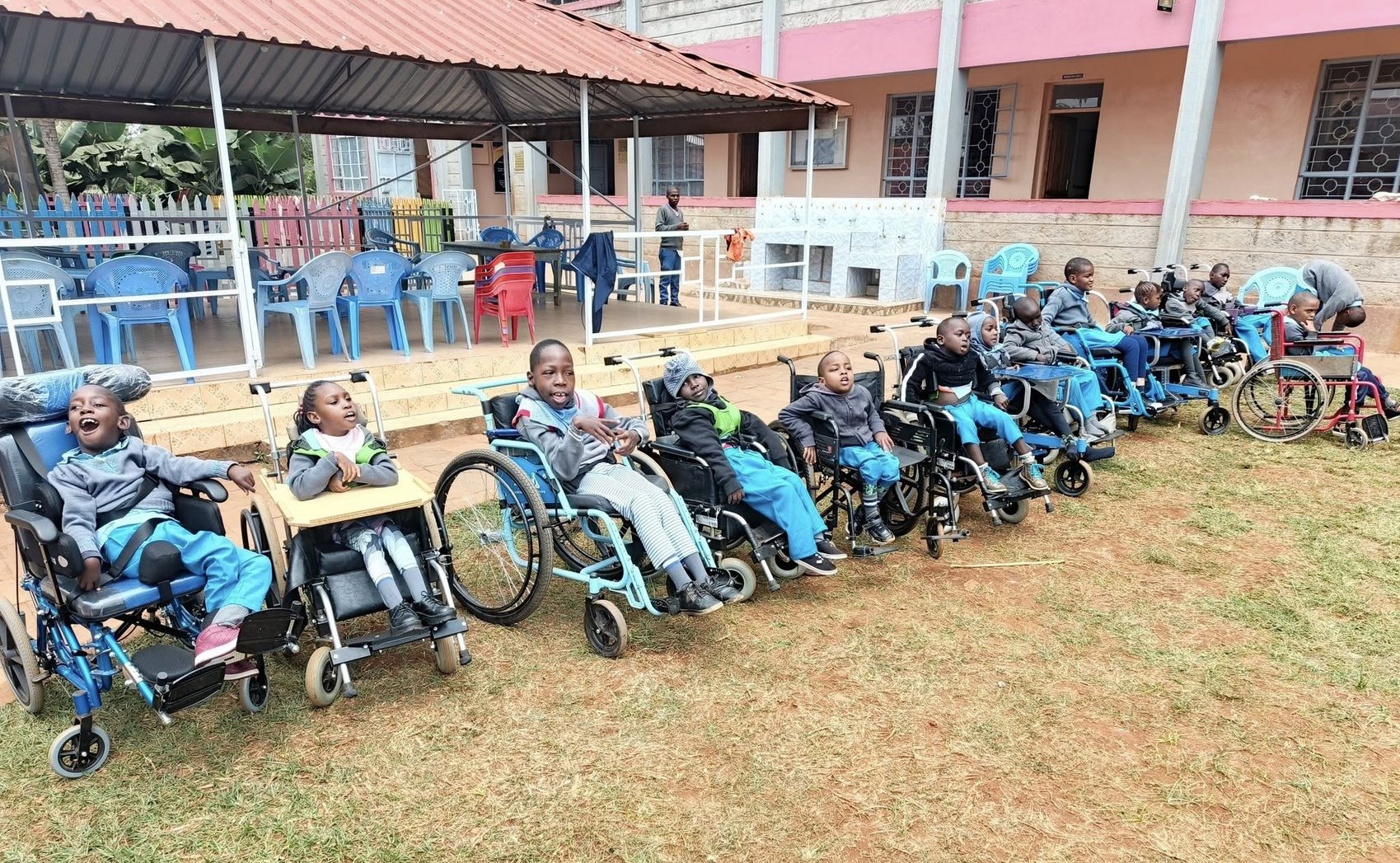
For many kilometres around Kaburugi, the Don Orione Centre is the one place a family can turn to, and we bring the children here ourselves, every day.
Sources: KNBS 2019 census, UNICEF, UNDP/NCPWD and UNPRPD reports (2024-2025).
~420,000
children in Kenya live with a disability, and only about 250,000 are enrolled in school.
15.5%
of people with disabilities use the assistive devices they need. Over 80% live in rural areas.
67%
live in poverty, while stigma, seen as a "curse", drives exclusion across society.